“My Planet of Mr. Teddy Bear was born because sometimes reality irritates me—the real world. Because I don’t understand mathematics or cash, and that makes me angry. In my world, on the Planet of Mr. Teddy Bear, that does not exist and never will.”
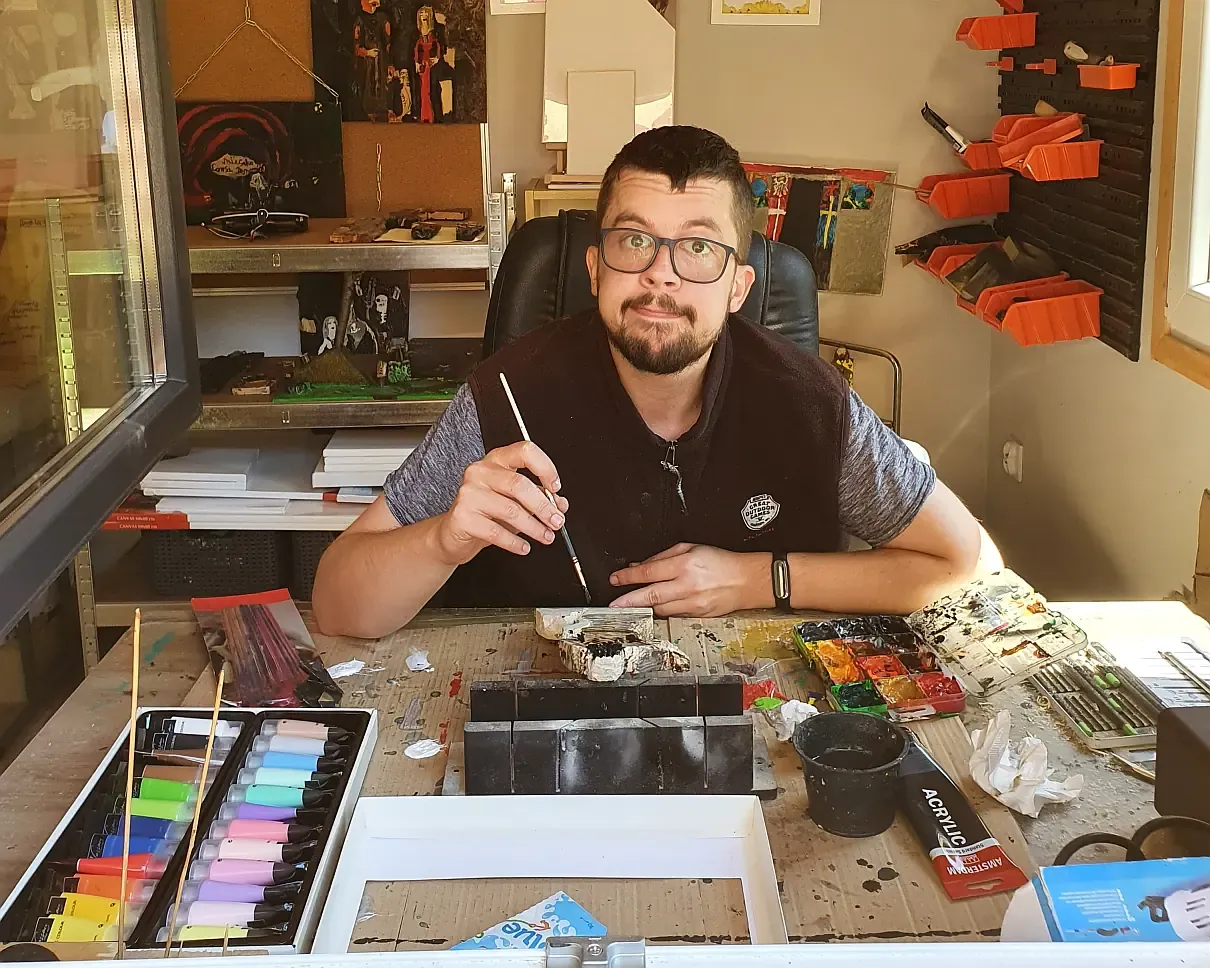
This is a pure cognitive shelter. Where the neurotypical structure demands constant commercial transaction, calculation, and clock-watching, Michał establishes a sovereign territory ruled entirely by alternative, spatial logic. The paracosmos acts as a literal shield against structural frustration.
“To this Apocalypse cycle, I was inspired by the movie 'Terminator'... it inspired me that if people blindly trust technology like Artificial Intelligence, it could end up just like that. I believe Artificial Intelligence should not be intelligent at all, nor should it possess feelings, because feelings should belong strictly to human beings.”
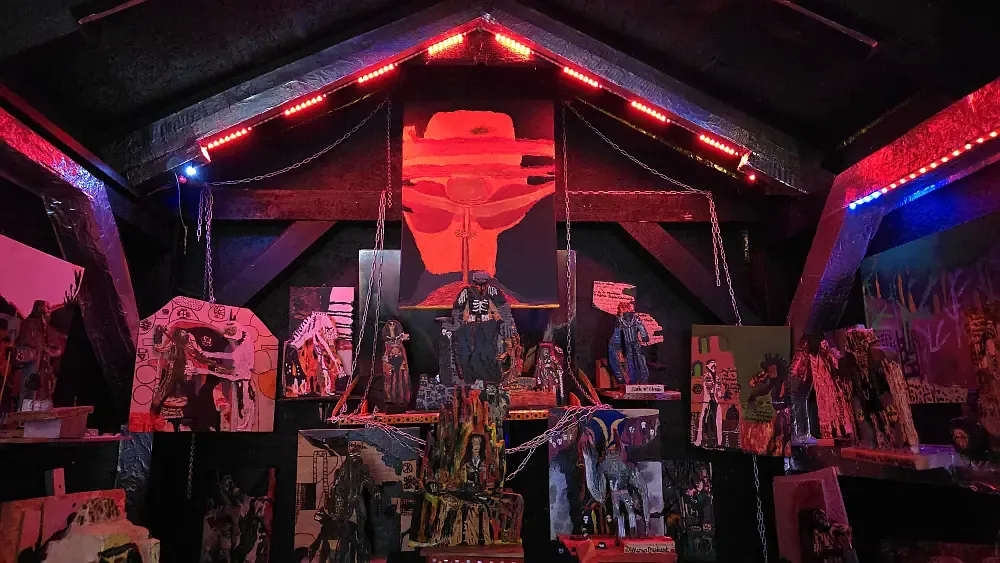
His Apocalypse series is a raw, pre-industrial warning. It is a striking curatorial paradox: an artist isolated in a small wooden shed, using nothing but steel tools and fire, defining the precise existential boundaries of global algorithmic expansion.
“Colors have immense meaning for me because, as a short-sighted person, I do not see what others see. Thanks to colors, I see what other people cannot see. I see greater depth—more beautiful tones. Through these colors, I truly see.”
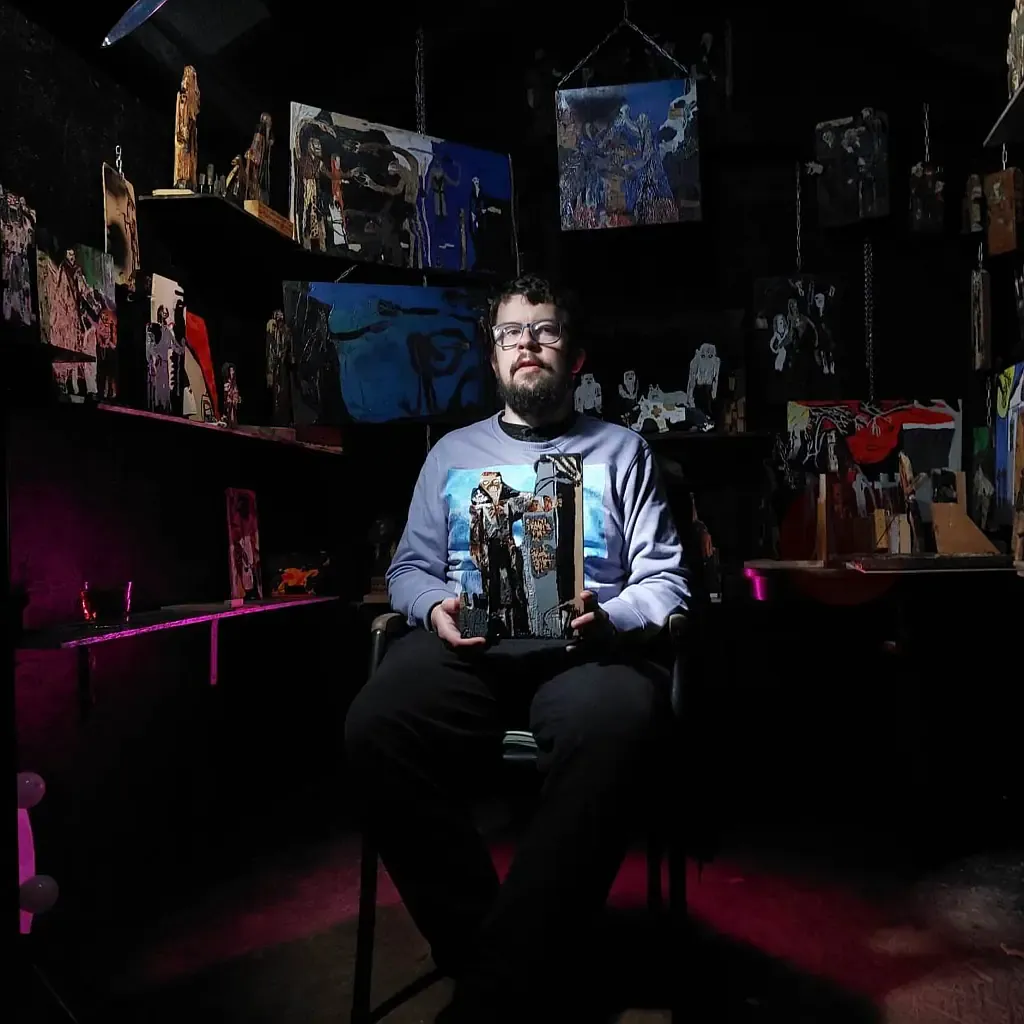
The biological limitation is completely rewritten here into an aesthetic advantage. Michał doesn't use raw, violent palettes by accident or error; his short-sightedness maps hidden optical layers, revealing high-contrast landscapes completely invisible to a normal eye.